
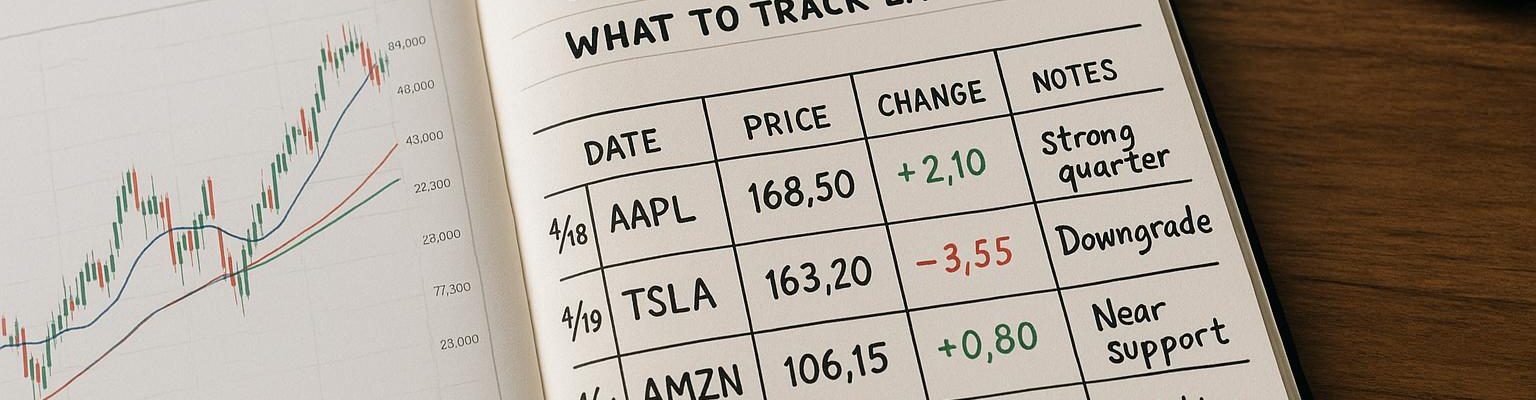
What to track in a stock journal each week
Introduction
Keeping a stock journal is an essential practice for investors striving to make informed decisions and track their financial progress. By systematically documenting your observations, strategies, and outcomes, you gain insights into your trading patterns and evolving strategies. This article explores key aspects to document weekly in your stock journal.
Weekly Market Overview
Begin your weekly entries with a brief overview of the market. Note the major index movements for the week, such as the S&P 500, Nasdaq, or Dow Jones Industrial Average. Include sector performances to understand which areas of the market are gaining or losing momentum. Incorporating economic news such as changes in interest rates, employment data, or geopolitical developments can provide context for market behavior.
In addition to just listing market indices and sectors, delve deeper into what drove these changes. Were the movements caused by external economic factors, or was it due to sector-specific developments? Understanding the root causes can provide insights into future trends. For instance, if a particular sector outpaces others consistently, it may hint at burgeoning opportunities or reveal sectors to be wary of should an economic downturn occur.
Moreover, evaluate the market’s overall sentiment. Are investors displaying aggressive buying behavior indicating a bullish sentiment, or is there hesitance seen through increased volatility and sell-offs? Understanding this sentiment can aid you in aligning your strategies, perhaps helping in deciding whether to be conservative or take more aggressive positions.
Performance of Your Portfolio
Next, update the performance of your stock portfolio. Record the value of each stock, any dividends received, and the total change in your portfolio’s value. Pay attention to how these changes correlate with the broader market movements, and note any major contributors to gains or losses.
As you record these details, contemplate on individual stock performances. Was the increase in a particular stock expected based on your predictions, or did it surprise you? This can help in reassessing the prediction models you employ. Additionally, keep an eye on dividend changes as they often signal corporate shifts, either positive like increased profits or negative such as cost-cutting measures.
Correlation analysis can also provide deeper insights. If your portfolio shows erratic performance unaligned with market trends, it might indicate a need for diversification or adjustment in stock choices. Consistency in outperforming or underperforming against market indices should prompt a thorough evaluation of your investment strategy.
Trades Made
Document any buy or sell transactions executed during the week. Include details such as the reason for entering or exiting a position, the stocks involved, prices, and the date of transactions. Capturing your thoughts and analysis at the moment of the trade is critical for evaluating decision-making processes later.
Reflection is valuable here. Upon reviewing trades made, seek patterns in your decision-making. Are you entering trades on impulse or driven by strategic analysis? If errors occurred, consider what safeguards could prevent similar mistakes in the future. For each trade, document what worked well and what could be improved, leading to enhanced decision-making and strategic growth.
Stock Watchlist
Maintain an evolving stock watchlist as part of your journal. Record companies you’re considering investing in, along with the rationale behind their inclusion. Track price targets, potential entry points, and key events like earnings reports or upcoming product launches that could influence stock performance.
While tracking, also assess the fundamental strengths of these watch-listed stocks. Look into financial statement analyses, industry position, management effectiveness, and overall growth potential. Equally important is understanding the risks associated with those companies, whether market-driven or internal, ensuring a balanced view of potential investments.
Revisiting your watchlist regularly allows you to stay updated on potential opportunities and threats, refining your selection over time based on emerging data or changing market conditions. This dynamic approach ensures your investment choices are aligned with present realities.
Analysis of Major News Impacts
Evaluate how significant news events may have impacted specific stocks or sectors relevant to your interests. Understanding the ramifications of such events enhances your ability to anticipate future market reactions. Note any changes in company fundamentals or competitive landscapes due to recent developments.
Spend time dissecting how news integrates into stock performance. For instance, how does a change in regulatory policies affect certain sectors? Were the impacts immediate, or did they take time to manifest on stock evaluations? Trying to distinguish between short-term volatility effects and long-term shifts due to news helps in creating a robust analysis framework.
Further, assess the reliability of the news sources and the actual impact compared to market expectations. By comparing your anticipations with actual outcomes, you refine your ability to interpret future breaking news and its possible ramifications accurately.
Emotional and Behavioral Reflections
Reflect on your emotional response to market fluctuations and trading outcomes. Acknowledge any psychological biases or habits, such as holding on to losing positions too long or selling winners prematurely. By recognizing these patterns, you can strive to improve your discipline and decision-making over time.
This process often demands brutal honesty. Are there moments you allowed fear, greed, or stress to dictate decisions? Identifying these triggers helps in building strategies to develop resilience. Consider practices like setting stop-loss orders or adjusting portfolios based on analytical outcomes rather than emotional impulses. By doing so, you cultivate a stoic trading mindset capable of weathering market perturbations.
Strategy Review and Adjustments
Finally, conclude your weekly journal entry with a review of your overall strategy. Assess your adherence to the goals and guidelines you’ve set, and consider any adjustments needed based on the past week’s performance and insights gained. Update your rules and strategies to better align with your long-term objectives.
Consistent strategy reviews allow for real-time adaptation. Perhaps the risk level targeted was met too aggressively, in which case a more conservative approach is warranted. Alternatively, potential opportunities missed might flag a need for more proactive engagement. Keeping a systematic review process ensures that your investment strategy evolves based on empirical data rather than assumptions or past biases.
Conclusion
Maintaining a detailed weekly stock journal can significantly enhance your understanding of personal trading behaviors and market dynamics. By systematically tracking the aspects outlined above, you refine both strategic approaches and emotional resilience, ultimately becoming a more proficient and informed investor. Remember, consistency in updating your journal is key to maximizing its benefits.
For further reading on stock market strategies, visit Investopedia.
This article was last updated on: July 17, 2026
